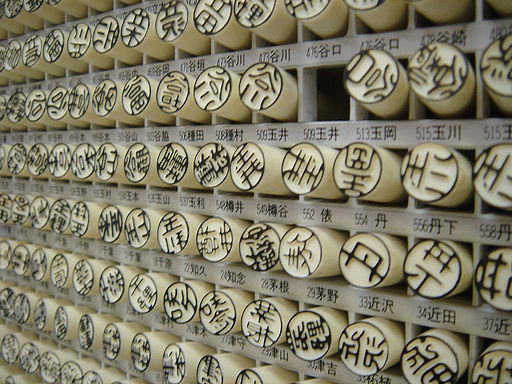
In this show we’ll be looking at an unexpected effect of the pandemic on bureaucracy in Japan and we’ll also be looking at how doing an intercultural course in a virtual world can change your outlook.
Welcome to show 253 of Absolutely Intercultural, A Day in the Life of Kalvin, coming to you from the beautiful Rheinland in Germany. Today’s show is an immersive journey about daily life in Germany, narrated by one of our Australian international students. Have you ever considered living overseas or wondered about what intercultural challenges you would face? Today we hear directly from Kalvin and experience a summer day in Germany firsthand.

Hello and welcome to show 251 of Absolutely Intercultural, Cultures in Management, coming to you from the beautiful Rheinland in Germany. Today’s show is about the culture of management, where we listen to three managers and how they handle some of the more hidden cultures in their workplace to be effective leaders. Culture can be more than just national or geographical identity, it can be about direct/indirect, female/male, formal/informal, old/young or it can unite people who have the same profession but who all grew up in the same country. You will have certainly encountered some of these yourself throughout life.
This show is about growing stronger overseas. Maybe you’ve always dreamed about a new life or modifying your old one? You will hear about two students who used their time abroad to reinvent themselves and discover how they managed this change with SMART goals. You will be surprised how these students spent most of their energy.
Harigautham Somasundaram, from the Indian Institute of Technology Madras, spent a semester at RheinAhrCampus, Germany, doing an academic internship. He explains how he moulded a new personality using a technique he learned in Germany – SMART goals. Marina, from Germany, shares her personal transformation in China. Initially, she was too scared to order food from a restaurant in China, but by the end, she was exploring the Chinese country-side far away from the trodden paths of regular tourists.
In this show, we are going to immerse you in the “culture of barber shops” which means you can expect to meet rough guys with motorcycles, full beards, dirty boots and, of course, a beer can in their hands.
First, we will listen to Tomi, perhaps the happiest barber in Australia, who shares his daily life as an employee in Scumbags Barbershop. Rashad, our exchange student from Azerbaijan is our second guest and will tell us his points of view about the barbershop culture. And finally, we will go listen to Tomi again, and this time he will tell us about the Scumbags philosophy.
Happy New Year! In this show, we are going to go back to shows 70 and 74 in 2008 and 2009 when I talked to Signe Møller here in Denmark about a new charity she had just set up.
This show, 234, is ten years later, so why am I re-visiting Signe’s charity 100% to the children? Because I bumped into a stall for her charity at a local Christmas market last November and I was curious to find out how this one-woman organisation was doing.
What is a virtual exchange? Maybe not what you think. We’ll be digging deeper into that in this special edition of Absolutely Intercultural coming to you from Denmark. My name’s Anne Fox and this is show 232. Today’s show is mainly about promoting dialogue between different groups of people. So what is dialogue? And can you tell the difference between dialogue and, for example, debate?
I have been curious about how you come to work in the intercultural field and have continued my conversations with people who are doing it. One thing I realise now after talking to several people is that there are many ways into an intercultural career.
Here for example is Dawn who was based in Ethiopia and formed Broads Abroad, a support group for expatriate women, based on the conversations that used to happen after the Zumba lessons she started giving.
And Franklin Yartey, a professor of intercultural communication at Dubuque University, Iowa, worked as PR manager of a dance school in his native Ghana before ending up in the US to continue his education.
And once you are doing it, it seems that intercultural work is its own reward as Joe Kearns describes!
So this show is the second in our series on how to get into the Intercultural field. Thanks to everyone who agreed to participate.
Another thing I noticed about today’s contributors is that they all had a connection with Africa, two with Ethiopia and one with Ghana. Listen to find out which is which.
Hello and welcome to show 221 of our podcast “absolutely intercultural” which is the fourth of series of “Erasmus 30” podcasts to celebrate and highlight the 30th anniversary of the most successful of all student exchange programs. In this episode, our two lecturers will share their exchange experiences and stories about their studies abroad. How did teaching in Germany under the Erasmus mobility program benefit a lecturer’s research activities and his academic life? Then we will listen to a lecturer from RheinahrCampus, he will talk about how he studied abroad two decades ago. Was it more difficult to arrange than an exchange semester today? What were the required documents in the past and now? And finally, we will look at the differences in student lives in different countries.
Did you know that Denmark regularly comes in at number 1 for global surveys of transparency and lack of corruption? Well I’m going to spoil all this by bringing you a show featuring only my family so there’s some nepotism right there! In this show we’re going to be talking about the dark side of visiting other cultures. We’ll start with my daughter, Mia, who has been doing a grand tour of the world. We are going to be a bit coy about naming the country she is talking about for reasons which will become clear later. But in this particular country she discovered how political corruption works. So what happens at election time?
And we’ll also be hearing from my brother, Greg, who has been on assignment in Dubai, about how abrupt some of the boundaries can be between one code of behaviour and another
We use cookies to ensure that we give you the best experience on our website. If you continue to use this site we will assume that you are happy with it.