
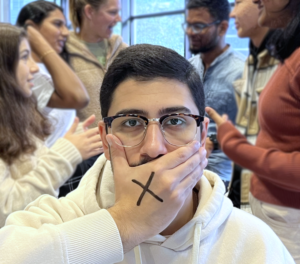
Hello and welcome to show 280 of our podcast “Absolutely Intercultural”. Today, we are going to talk about the culture of “Political Correctness”. Since the 1980s many people in public life have used politically correct language either to avoid discrimination and to treat others respectfully or because they are worried about being judged by more politically correct people. The original idea of the concept was to try to make the world less racist, less homophobic, less sexist, in short into a better place. But will this cultural change really ever achieve worldwide equality of genders and races? Or will the PC language only change the way we speak but not the way we really think or behave? Many critics see pc language as censorship and draw parallels to George Orwell’s utopian idea of “Newspeak” in his novel Nineteen Eighty-Four, where the totalitarian regime decides to reduce the language to the point that ideas which are not desirable can no longer be expressed.
From our guests, we will hear how they see and experience this new culture of political correctness, which is now gaining more and more influence on our vocabulary, our minds, and our lives.
absolutely filtered
In our first story, “absolutely filtered”, we will listen to Faisal from Iraq who is currently studying in Germany. Faisal tells us that political correctness in Europe makes him feel a little uncomfortable in communication. He compares the PC and woke languages to having a filter on everyone’s mouth.
absolutely responsible
In our second story, “absolutely responsible”, we will listen to Waqar from Pakistan who owns a plastic free shop in Germany – “Unpacked Remagen“. With his business, tries to introduce his customers to environmental awareness, such as climate change. For Waqar, political correctness concerns more than just the language we use. It is about taking responsibility and real action.
absolutely open-minded
In our last story “absolutely open-minded”, we will listen to Niklas from Germany. For Niklas, being politically correct depends on the situation he is in. At work, he will be politically correct. However, when hanging out with his friends, Niklas can allow himself to make some politically incorrect jokes to bond with them.
What about you? What do you think about political correctness? Does it come to you easily to be politically correct in every aspect of your life? And do you think with the help PC language we can really reduce discrimination and reach equality? Or do you struggle with the new language as if it censored and restricted your expression? Get in touch with us, and feel free to share your unique story with us here on this podcast.
Write a comment or mail us, we could do a follow-up interview with you in one of our next shows. On our web page, absolutely-intercultural.com, you can get more information about this show and previous episodes, and you can leave comments. And if you enjoyed the show, please like us on Facebook too.
By the way, did you know we are also on iTunes or Apple Podcasts? You can subscribe to us there for free and give us a rating and a comment.
Our next show will be coming to you on 2 December.
Until then – rethink your own political correctness –
Bleiben Sie absolut interkulturell!
The host of this show is: Dr. Laurent Borgmann
Chief Editor: Natalia Obikhod
Assistant Editors: Kim Kyeongjin, Faisal Faisal


 Hello dear listeners and welcome to show 279 of our podcast “Absolutely Intercultural”. Today, we are going to talk about the “Green Culture”, about being eco-friendly, about the culture of environmental sustainability – or whatever words you use to describe this phenomenon. Today, we are shedding some light on the Green Culture that is getting more and more popular all over the world. From our guests, we will learn that the green culture has many different practices and approaches, from saving water to reflecting on your wardrobe. We will also hear what motivates people to join the green movement, whether it is a love for animals or for the planet or simply a wish to save some money.

 Hello and welcome to show 274 of our podcast “Absolutely Intercultural”. Our topic for today is “Culture change”. Cultures and people who live in them are interconnected and influence each other. For some people, it is easy to adapt to a new environment and accept the challenges of culture change. They see new experiences as an opportunity to learn and grow personally. Some people, however, are rather careful about exposing themselves to new cultures and as a result are less likely to be influenced or changed.
 Hello and welcome to show 273 of our podcast “Absolutely Intercultural”. Our topic today is “What is home?”, a question that has many interpretations and potential answers. Is it the place in which we were born or the place where we live now? And is it actually a place at all? For some people, home is connected to their family roots. At the same time, others find it hard to identify themselves with their country or region of origin – they have moved on and made their home in other corners of the world. Some people had to leave their home, some may never even have had a real place to call home.
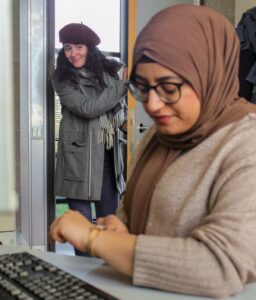 Hello dear listeners, and welcome to our podcast “Absolutely Intercultural”. This is show 272, and our topic today is “The Apology Culture”. Are you the kind of person who easily and quickly apologizes? Or do you have a sleepless night when you know that you should apologize to your boss the next morning? Making mistakes may be painful, but it is the fastest way towards getting it right. Some people can admit their mistakes quite easily, they apologize and move forward. On the other hand, there are people who are stuck in their guilt for what they have done; people, who find it very hard to say sorry to others, and sometimes, even to forgive themselves. Is there any universal formula for how to apologize properly? Are there any paths for moving from guilt to self-improvement more quickly?
 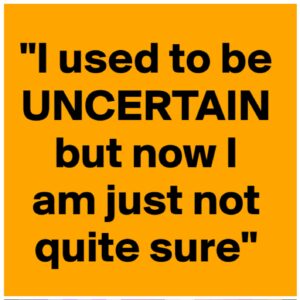 Hello and welcome to show 271 of our podcast “Absolutely Intercultural”. Our topic today is “Uncertainty”. We are all faced with uncertainties every day, but the way that we deal with them and the way we feel about them makes us unique. Some of us feel terribly helpless in situations of uncertainty. On the other hand, there are people, for example those who enjoy playing poker, who think that certainty is boring and are always looking for the adrenaline which uncertainty provides them with during their adventures. Are there any tricks, for those who don’t like uncertainty to be able to take decisions and feel safe with their choices? Or for those who seek uncertainty as a thrill in life and enjoy weighing up different probabilities?