absolutely intercultural 153 +++ South Korea +++ Germany +++ Semester abroad +++ Ideal student +++ Personal development +++

EWHA-University-Students Today I am going to talk about the exciting decisions of those students who broaden their horizons by studying abroad. Furthermore we will talk to an expert who helps these students get the right information and financial support for fulfilling their dreams of living and studying in another country. Last but not least I would like to share an urban myth about an intercultural incident on a British Airways flight complete with a happy ending (at least for some of the people involved!)

absolutely remarkable
In Germany it is normal for about 20% of students at universities go abroad during their studies. However, Anne Gründer, is rather special in many ways. She studied Biomathematics and chose to spend a semester studying abroad at EWHA Woman’s University in Seoul, South Korea. And because she enjoyed her time so much she actually extended her stay for a second semester. Anna also successfully learned the language with the Asian symbols that look so unfamiliar to the western eye. Now that she is back in Germany she looks back on the cultural differences she experienced and shares how she benefited from her stay. In our first category  she will start by telling us why she chose South Korea as her destination for her semester abroad.

absolutely courageous
If one of our listeners is toying with the idea of coming to Germany, our interview will be particularly interesting for you. Kata Perjési is an Hungarian student. After spending a study semester abroad in Finland, she had planned to do her internship in Finland too. However, luckily for us she ended up being our new intern here at RheinAhrCampus. Kata is from Corvinus University in Budapest and will stay here for six months. In our next category she is going to tell us, why she chose Germany as her destination and what benefits she expects to get out of her stay abroad.

absolutely ideal
Our last guest for today is Wolfgang Kräft. He is working for the “German Academic Exchange Service or DAAD”. Together with his team, one of Wolfgang’s jobs is to travel through Germany and to inform German students how they could study abroad and which financial support they can get. They stop in bigger cities with their go-out mobile bus and provide students with a lot of information. In our last category Wolfgang will tell us what the ideal study abroad student should look like, how students can receive information about a semester abroad and finally he will give us advice on how your stay abroad could be the most productive time of our studies.

absolutely funny
Let me finish today with an intercultural urban myth about a black man and a white woman – a story has turned into a well-copied piece on the internet over the last decade. According to different versions this incident would have happened on about 17 different Airlines which is not very plausible but the story is nice enough to be re-told here:

“A 50- year old white woman on a British Airways flight arrived at her seat and saw that the passenger next to her was a black man. Visibly furious, she called the air hostess.
“Whats the problem, ma?” the hostess asked her
“Cant you see?” the lady said – “I was given a seat next to a black man. I can’t sit here next to him! You have to change my seat”
– “Please, calm down” – said the hostess
“I think, all the seats are occupied, but I`m still going to check if we have any.”
The hostess left and returned some minutes later.
“Madam, I spoke to the captain and he confirmed that there isn`t any empty seats in the economy class. We only have seats in the first class.”
“Look, it is unusual for our company to allow a passenger from the economy class be upgraded to the first class. However, given the circumstances, the captain thinks that it would be a scandal to make a passenger travel sat next to an unpleasant person.”
And turning to the black man, the hostess quickly said:
“Which means, Sir, if you would be so nice to pack your hand luggage, we have reserved you a seat in the first class…”
And all the passengers nearby, who were shocked to see the scene started applauding, some giving standing ovations.”

Adapted from: http://www.thatsnonsense.com/view.php?id=1481


Our next show will be coming to you from Anne Fox in Denmark on 4 May.

Until then –
Bleiben Sie absolut interkulturell!

The host of this show is: Dr. Laurent Borgmann
Editor: Markus Scherer

Download
Podcast-Feed
iTunes-Abo


absolutely intercultural 151 +++ Australia Day 2012 +++ multilingualism +++ patriotic celebrations +++ BBQs and Barbies +++

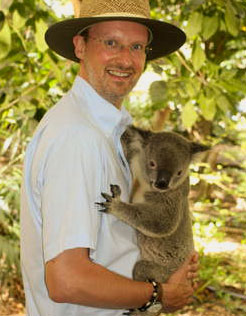
Laurent hugging a Koala

absolutely down-under
Like my last show, episode 151 also comes to you from Australia. You can listen to how I get woken up by exotic birds outside my bedroom window every morning because  I thought I should record my introduction at this time of the day to share this experience with you because this has become my regular Australian alarm clock. As I live just metres from the national park I assumed they must have some kind of noisy monkeys in that park but then I discovered, it was birds, such as cockatoos, kookaburras, and some very colourful small parrots that I cannot identify. After a month in the country I finally manage to sleep through this incredible noise, and if I didn’t, I would have to get up at 4:30 every morning when this dubious concert starts. This week my class and tutorial at the University of the Sunshine Coast will not take place because of Australia Day 2012, a national public holiday. So I started asking people what this national day is all about and I received many, but sometimes contradictory answers because while this day is meant to promote and celebrate national unity it seems that every year it is accompanied by the criticism that instead of promoting multiculturalism this day commemorates the 26 January 1788 the arrival of the First Fleet at Sydney Cove where English settlers put up their flag. So opponents tend to call it “Invasion Day” and propose to change the national public holiday to another date. Let me share with you what some Australians told me about Australia Day. (If you want to find out more about Australian Identity you may want to revisit Anne’s show 76 on “mateship” and if you want to check out what my own life in Australia sounds like, check out my own last show 149.

absolutely diverse
I would like to introduce you to my neighbours here in Australia. Simone and Leonardo from Switzerland. Their background is so multicultural that it would perhaps be difficult for them to be nationalistic. I got interested when I noticed that mother and son were using several different languages even between them during an ordinary day.
Believe me I was very confused I when I saw Simone and Leonardo for the first time. From where I was sitting I thought I could distinctly hear about five or six people talking in three different languages but when I looked up I could see only two and had to realize that these two were actually using all three languages between them.

absolutely nationalistic
Australia Day is an opportunity to celebrate what is best about Australia including vegimite, BBQs, and cricket but some people are also critical of the fact that the image which is projected on this day is a very “white perspective” where the indigenous people do not really play an important role. I took my microphone into the classrooms to find out what it means to be Australian and what the day actually celebrates. Let us first listen to Mark from England and Meredith and Josh who are Australians. I also asked three international students what they knew about Australia Day and whether they could draw parallels to national or patriotic celebrations and movements in their own countries. I talked to Daniel from Sweden, Martin from the Netherlands and Clement from France.

absolutely barbie
My mate Len shares with me the secrets of the most Australian of all institutions which no Australia Day can do without. The BBQ or the “Barbie”. I had never thought about the unifying factors of this very male-dominated cooking experience. It is true that every house I have seen so far had a fixed BBQ and there are even public BBQ places in every scenic spot on the coast so that families can have an outdoor experience and bring their own food and drink.

Our next show will be coming to you from Anne Fox in Denmark on 2 March

Until then –
Bleiben Sie absolut interkulturell!

The host of this show is: Dr. Laurent Borgmann
Download

absolutely intercultural 149 +++ Queen and Obama in Australia +++ Day in the life of Laurence +++ Master in International Marketing +++ EXlites solar lighting +++ stereotypes French-German +++

kangaroo road sign near to the University of the Sunshine Coast (photo L.Borgmann)Hello Mates and G’day, this is show 149 of our podcast absolutely intercultural. And it is coming to you all the way from down-under, Queensland, Australia where I am teaching and doing some research for one semester. Two months ago, in October 2011, the Queen of England visited Australia. Only a month later, in November by the President of the United States came to Australia, too. And now, in December I started my summer term as a visiting academic at the University of the Sunshine coast (LOL). So who am I? My name is Elmar-Laurent Borgmann and after all these important state visits which were widely reported about in the Australian media I would today prefer to concentrate on more mundane,  everyday aspects of life in Australia as experienced by a European. And yet, I hope we will be able to surprise you with some stimulating intercultural findings. Our interviewees today are from France, from Germany, and of course from Australia.

absolutely down-under
Let us look at an ordinary day in Australia. Some people back in Europe listened to my absolutely down-under reports during my last stay in Australia. They had heard about a “Tropical Christmas by the Pool”  or a “National Australia Day” which I described both in previous shows and learned a lot about intercultural differences.  However, some of them asked me to concentrate more on a the normal, regular, everyday life in Queensland. And they are right – we do expect holidays and celebrations to be different in different countries – but how about a regular university day? Hmm, what a challenge. I had thought this was too boring to record but maybe not? So, I followed myself with the microphone and recorded my intercultural impressions one morning from getting up at 7 o’ clock until I arrived at the University of the Sunshine Coast at 9. You will notice from my comments how much I like this part of the world – except for the first minutes after waking up – I admit, I am not a morning person. In the podcast you catch me waking up with my windows wide open to the tropical forest. In a second part later in the show I continue my intercultural report about a regular Australian morning going to work on the Sunshine Coast in my car. I would like to share some thoughts about beautiful landscapes but also of rather masculine-looking cars and trucks in this country before I arrive at the University of the Sunshine Coast where finally I see some wild kangaroos, not on a road sign but in real life and much closer than I expected …

absolutely business-like
I will also take you into the university, where international students from Europe will describe how in their International Marketing Class they did some work for an Australian Business. The round-table discussion was recorde after an exam situation a couple of weeks ago right at the start of the summer semester 2011/2012. To me summer 2011/2012 still sounds rather weird as in Europe only winter semesters could span two calendar years. So this is just another reminder that we are in the southern hemisphere. But back to the classroom. I was invited to sit in on the exams of students on the Master of International Business program. Apart from myself as external examiner, there was of course Dr. Leone Cameron, the regular lecturer but also, Mike Arieni, Managing Director of EXlites, a regional business for whom the group of international students had done some research about solar Energy in Europe. I asked the group how this combination of international students, an interculturally trained lecturer and a local business person enhanced their academic progress. Leone’s Master course the students had the chance to get in touch with a real business man and help him prepare his business plan for entering the European Market. Just like Mike, I, too, was impressed by the depth of the students’ research and I had a feeling that Mike took very good notice of the opportunities and challenges that the students presented for the different European countries. In a second part we will also hear from Waldemar Schneider and Clément Slastan about some of the stereotypes the international students confirmed when they lived together in shared apartments. Clément seems to have noticed a certain “lack of flexibility” in the Germans.

Once you have heard the show, please go to our “write us an email“-button in the right margin and tell us whether you liked these slightly unusual intimate insights into my own life down-under and whether you would like to get more such personal reports.

Our next show will be coming to you from Anne Fox in Denmark on 6 January.

Until then –
Bleiben Sie absolut interkulturell!

The host of this show is: Dr. Laurent Borgmann

absolutely intercultural 145 +++ Internship FAZ +++ Facebook no thanks! +++ JUAf charity Tanzania +++ Tradie of the Month +++

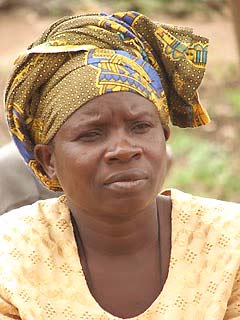
Kikwe Woman in the JUAf projectToday our show will be all about work and will focus on different work situations. You will first listen to an interview with Kyle Hickman from California who did an internship with a German newspaper, then to Mathew Dunne, a plumber from New Zealand, who worked in England and who is currently working in Munich, Germany. Also, I interviewed Judi McAlpine, an American manager who quit her job to found a non-profit organization in Tanzania. Adelheid Korpp will tell us her reasons, why Facebook will never play a role for her, neither in her working life or her private life.

absolutely committed
In our first category I talk to Kyle Hickman from California. At the time of the interview, Kyle was doing an internship with a big national newspaper in Germany, the “Frankfurter Allgemeine Zeitung“,  and told us a little about the cultural differences he had noticed between California and Germany. For example, he seems to have detected a difference in attitude towards interns who are doing a practical training in a company. While he expected to be exploited as cheap labour – making coffee, copies or “cold calls” he noticed that his internship in Germany was really centered on the professional development of the intern – often even based on the intern’s personal likes and interests. So, from the beginning Kyle was trusted with what he calls “real work” and was able to contribute to the success of the newspaper. However, he also found out that smiling too much in the work place could be seen as suspicious in his host country and adapted his behavior accordingly. He did not find it difficult to integrate, though, as he grabbed every opportunity to be social with his co-workers. Listen out for what Kyle shares about eye-contact and how he had to adapt to a different culture.

absolutely careful
In our second category I talk to Adelheid Korpp. She is responsible for the so-called “incoming students” at RheinAhrCampus. Students from our partner universities who have been in contact with her often want to add her as a friend to their Facebook accounts. However, Adelheid is suspicious of being part of this biggest virtual community in the world. Well, she is probably right because life was difficult and complex enough before we had to check Facebook and Twitter. Sharing your personal information and pictures on the internet can, indeed, sometimes perhaps be harmful for you and for your career. So let’s find out, why she doesn’t want to take part in the big social media hype.

absolutely helpful
In our third category  I interviewed Judi McAlpine from the US when we both met in Cambodia earlier this year. Judi was a very successful manager for a huge company in the US. But then she transferred all her resources into a 2-years stay in Tanzania, where she lived in the villages with indigenous people and founded a charity. JUAF is a registered non-profit charity located in the Kikwe village of Tanzania. In partnership with indigenous women, Judi founded a village with resources for vulnerable women and children to empower them to fight poverty. This is done through micro financing, education, and support. Check out their blog for more information. But why would someone like Judi give up her well-paid job in the US to move to third-world-country?

absolutely tradie
In our last category I Interview Mat Dunne who is a plumber from New Zealand. He has travelled a lot around the world for his work. He worked in Canada and in England. Right now he is living in Munich, Germany. In every step of his life he experienced different cultural situations. In the interview he will tell us about the differences in reputation between “tradies” in New Zealand and craftsmen in Europe. It is, indeed, true that the same profession may have very different prestige and reputation in different countries. I was personally surprised during my time in Australia to find that “tradies, unlike their often bourgeois German counterparts would mostly be very good-looking guys with a cool hair- and life style and a surfboard on their cars so that in between two customers they would hop on their boards and enjoy the surf. On page 3 of cheap newspapers you would sometimes even find the picture of a shirtless “tradie of the month”.

Our next show will be coming to you from Anne Fox in Denmark on 14 October

Until then –
Bleiben Sie absolut interkulturell!

The host of this show is: Dr. Laurent Borgmann
Editor: Markus Scherer

absolutely intercultural 143 +++ ERASMUS special +++ Experience Report +++ EU-placements +++ Internship +++

ERASMUS LOGOToday, we present a show which is going to focus on the European Program called “ERASMUS”, named after Eramus of Rotterdam. However, the name also stands for “EuRopean Community Action Scheme for the Mobility of University Students”. So, University students can apply for ERASMUS grants when they want to study abroad withinin Europe. Therefore we will hear different opinions about this mobility program and the opportunities students gain by studying abroad within the ERASMUS framework. Nowadays it is more and more important for students to internationalize themselves during their studies. This means they have to leave their comfort zones and broaden their horizons by studying abroad. In order to initiate this process, the European ERASMUS program was founded almost 25 years and has been giving out grants for the internationalization of students.

 absolutely basic
In our first category Adelheid Korpp is going to tell us, what the program is about and which preparations students have to make. She is an expert on the ERASMUS program. She is responsible for the so-called “incoming students” at RheinAhrCampus and she knows a lot about the grants. She will tell us which countries in Europe take part in the ERASMUS program and what benefits student can expect if they decide to go on an ERASMUS exchange. For good Europeans it is essential to understand each other better particularly in context of the recent discussions about financial solidarity between the European member states.

absolutely experienced
In our second category Timo Schneider will share his experiences with us. He is back from his stay in Worcester, England, where he studied at a partner university of RheinAhrCampus. He will tell us how he heard about the program, what motivated him to put in an application, and of course which benefits he got from his stay. Timo also shares some of his intercultural experiences in sports where he noticed that his previous stereotypes really did not help. He will also give us a very useful advice.

absolutely working
In our last category Carsten Ritterath a student of business administration reports about his preparation for an internship in England. His football coach helped him find the English organisation where one of his tasks was to compare English and German approaches to health management in companies. Carsten managed to get a grant from ERASMUS-placements and he tells us what he needed to do in order to apply for this. He wrote a letter of motivation, a curriculum vitae, he took part in an intercultural seminar and he had to pass an English test. I took this interview with Carsten some time ago so in the meantime he is already back from his very successful ERASMUS stay.

Our next show will be coming to you from Anne Fox in Denmark on 16 September

Until then –
Bleiben Sie absolut interkulturell!

The host of this show is: Dr. Laurent Borgmann
Editor: Markus Scherer

absolutely intercultural 141 +++ NYOI +++ Exchange Students +++ Blogging +++ One Day with Lucy Warren +++

oRACle MarketingThis show is all about the life of students here at RheinAhrCampus in Germany! You will gain an insight into the daily life of Lucy Warren, an exchange student from Australia. She shows us what the life of an exchange student is like and what specific things you can do in Remagen: e.g. editing the international exchange students blog – supervised by Adelheid Korpp. And you will have the chance to get the the latest news of the “National Youth Orchestra of Iraq” and how our students are involved in that project.

absolutely daily
The students at RheinAhrCampus know that “intercultural experience abroad” which is documented on their CVs can be a competitive advantage when they are looking for a job. This means they have to leave their intercultural comfort zones and broaden their horizons by studying or working in a different country. It may seem a huge step but it really helps students understand intercultural differences, learn other languages and prepare themselves for their future business lives where they will have to deal with different cultures in different situations. So it seems like a “must have” to go abroad and that is what Lucy Warren, an Australian Student from the University of the Sunshine Coast did. She has spent a whole year away from home at the German partner university doing a combination of studying and internship abroad. Before she left she documented one of her typical days Let us listen to how she starts her day, what helps her clear her mind and which free time activities she indulged in during her stay.
If in our audience there are students who want similar experiences, please feel free to contact us because we like to have international students on campus and we are always looking for interns, too. So go out and internationalize yourselves!

absolutely ambitious part I
The Russian student Nadya Kokareva, who also likes to take risks and jumps in at the deep end, came to our university less than a year ago. She enrolled on one of my courses – International Business Simulations. There we simulated a company called “oRACle” which helped Paul MacAlindin and his “National Youth Orchestra of Iraq” promote their work. Nadya is the president of that company and she will tell us what she experienced during the course, what she learnt from the experience and how this course helped her prepare for her future working life

absolutely blogged
In our next category Adelheid Korpp will tell us, how the exchange students at RheinAhrCampus document their experiences and their daily lives on an exchange students’ blog – so that everyone who is interested in their progress, can follow them online with text and pictures. It is a useful exercise for every exchange student to share their experiences with their friends and families on the world wide web. The students are talking about their travels in Germany and Europe, about their academic experiences at RheinAhrCampus and of course about events they experience during their stays, like for example the famous Karneval in Cologne.

absolutely ambitious part II
Lucy Warren is going to tell us more about her job in the simulated company “oRACle”. While Nadya is the CEO of that simulated company which is helping the “National Youth Orchestra of Iraq” to promote their visit to Bonn this autumn through social media, Lucy is actually the PR manager of that same company. Lucy tells us what her main tasks have been and how this practical experience may be a little different from learning the theory of PR work from a textbook.

Our next show will be coming to you from Anne Fox in Denmark on 19 August

Until then –
Bleiben Sie absolut interkulturell!

The host of this show is: Dr. Laurent Borgmann
Editor: Markus Scherer

absolutely intercultural 138 +++ Saudi Arabia +++ Iraq +++ NYOI +++ Diversophy +++ Refugee Week +++

Diversophy logoIn this show we’ll be hearing about how games can help your intercultural awareness. We’ll also be following up on a couple of items from the last show by going to Iraq to hear more about the National Youth Orchestra of Iraq initiative which brought Arab and Kurdish Iraqis together to make music and we’ll be re-visiting the issue of the right of Saudi women to drive cars in cities.
absolutely independent:
In the last show we went absolutely independent when we heard about the Saudi women who were going to drive their cars on June 17th in a bid to convince the authorities to accept this practice. Actually June 17th was not meant as a one-off but as a start date, but it seems that the day went well with quite a few women driving their cars with only minor brushes with the police as a result. This is in contrast to what happened with a similar action in 1990 when the women then were harassed by the authorities and other citizens and described as ‘The fallen: Advocates of vice and corruption on Earth’. ‘A source of depravity’ and when other citizens were advised to ‘Take whatever action you see fit’ to bring them under control. What’s the difference between then and now? Perhaps that, because of social media, the eyes of the world were on Saudi Arabia on this occasion.

absolutely social
So does social media such as Twitter and Facebook have an effect on culture? That is a question which I shall be exploring as part of a webinar organised by Christine Develotte and Fred Dervin on June 29th.  More specifically we will be looking at whether social media can actually contribute to developing intercultural competences. You will find the link to the free webinar here.

absolutely playful
We’ve covered games before and today we’re going to hear from George Simons working with Kati Volt about his Diversophy game, how it works and a bit of background about how the game is made. So how can you gain some intercultural awareness through a game? George Simons of Diversophy.com explains the game which started out as a face to face card game but now also comes in online and Android smart phone format. We also hear about sample cards in the game and how people react to them. In fact George and I had a great deal more to talk about; too much for one show, so you’ll be hearing more from George and his gaming approach in future shows. In the meantime you might like to try one of the Diversophy Android apps on your Smart phone.

absolutely musical
Now let’s be absolutely musical and hear a little more about that incredible orchestra put together by audition on YouTube which puts together traditional enemies, Arabs and Kurds, to play together in an Orchestra which is due to perform at the Beethoven Festival in Bonn this coming October. In previous shows we have heard from Paul MacAlindin, the conductor and Karin Wolf, the viola teacher, as well as the RheinAhr Campus students whose task it was to find a way of raising awareness of the event. In this show I will play you an extract from one of the videos put together to explain the background to this very special orchestra. You can see and hear the whole video here.

absolutely desperate
Did you know that this week is international refugee week? In Australia it was marked by an amazing reality show, Asylum Exit Australia: Go back to where you came from , in which over three consecutive nights you followed the journey of six ordinary Australians who made the refugee journey to Australia backwards; in the words of the programme makers :

Deprived of  their wallets, phones and passports, they board a leaky refugee boat, are rescued mid-ocean, experience immigration raids in  Malaysia, live in a Kenyan refugee camp and visit slums in Jordan  before ultimately making it to the Democratic Republic of Congo and  Iraq, protected by UN Peacekeepers and the US military. For some of  them it’s their first time abroad. For all of them, it’s an epic  journey and the most challenging experience of their lives.

This is all about trying to walk in the shoes of others or leaving your comfort zone and is meant to confront viewers with their stereotypes of refugees as spongers and taking the easy option and so on. For the moment this has only been broadcast on Australian TV.  But the TV company have added another way in which you can get a taste of what it might be like to have all your normal certainties suddenly taken away from you, in the form of  a simulation. The game starts in Australia where, through some unamed political developments, you are suddenly in extreme danger of your life and need to escape. How does it feel to have to leave the place you consider home, to suddenly not know who you can trust? These are the sorts of issues which the game explores. You can try it out for free. I’d be interested to hear your reactions so do add a comment here after playing it. .

Ways to support “The National Youth Orchestra of Iraq”:

The National Youth Orchestra of Iraq would especially welcome your support on the various social media sites if you have a moment or two to spare.

YOUTUBE: 1. NYOI plays for kids, 2. General Information, 3. KICKSTARTER

FACEBOOK: 1. German, 2. International

Our next show will be coming to you from Dr. Laurent Borgmann in Germany on 8th July 2011

The host of this show is: Anne Fox
Editor: Markus Scherer

absolutely intercultural 137 +++ National Youth Orchestra Of Iraq +++ Marketing Project +++ New European Mobility Law +++

The National Youth Orchestra of Iraq” is an inspiring project led by musical director Paul MacAlindin which  is going to play in Bonn, Germany, on 1 October in the context of the Beethovenfest. In show 135 I interviewed Paul about the project itself. Now  I am talking to some of the supporters of his project. On the one hand there is Prof. Karin Wolf, who plays the violin and is helping the players to improve and on the other hand there are two students from RheinAhrCampus who are also playing their role in the project.

absolutely open
Karin Wolf, a professor of viola, will share her experiences with us.  She tried to collect musical instruments for the orchestra. Karin asked at her school whether people would have instruments which are no longer used and which could be donated to this international project. Furthermore she supported Paul and now she is helping the viola players to improve. In this interview she will share her motivation with us and the reasons why she is taking part in the project.

absolutely professional (part I)
Lucy Warren, our committed exchange student from Australia and co-worker in the International Office, will interview Nadya Kokareva from Russia. They are both involved in the “National Youth Orchestra Of Iraq” project.  Nadya is also a participant of the university course “International Business Simulations” at RheinAhrCampus. Nadya will tell us in a first part how quickly her university course and the simulated company turned into a realistic one with a customer, what the students are doing for this customer and how they support the “National Youth Orchestra of Iraq”.

absolutely political
I would like to share a commentary given by one of my university colleagues about a political change which has affected Europe during the last few months. Two students from RheinAhrCampus, Marc Friedrich and Andrea Edel, interviewed Heinz Schaumann a university lecturer and expert in European institutions and law. Marc asked about the newest political developments in Europe; the recent changes in mobility law which were widely discussed in Germany. The countries in Europe have gradually opened their borders to the labor market. Especially those countries which followed the 2-3-2 rule are now the focus of European attention. This rule was made to somehow protect the labor markets of Western European countries for 7 years from workers migrating from East to West. Heinz Schaumann is in a very good position to give us a report about what happened and about the future prospects, for example the advantages and disadvantages for the “old” countries of the European Union.

absolutely professional (part II)
The Arabic and Kurdish players of the orchestra will  leave their country in September, albeit, only for a short period of time and will travel to Germany. They will  have to abandon their intercultural comfort zones by leaving  their home country and coming to a foreign country with a very different culture, to play music in a multi-ethnic orchestra. In our last category  Nadya tells us in the second part of the interview what specific role she held in the project and in the simulated company and what YOU, the audience, could do, to support the Orchestra, too! If you are interested in the way the exchange students are involved in the project, you can also follow them on their blog.

Ways to support “The National Youth Orchestra of Iraq”:

YOUTUBE: 1. NYOI plays for kids, 2. General Information, 3. KICKSTARTER

FACEBOOK: 1. German, 2. International
We hope we can motivate some of you to help support the “Youth Orchestra” with their project and their trip to Europe!

Breaking News: Saudi Arabian women want to be allowed to drive on their own! You can get to know something about their situation on Youtube and on their blog! Enjoy!

Our next show will be coming to you from Anne Fox in Denmark on 24 June

Until then –
Bleiben Sie absolut interkulturell!

The host of this show is: Dr. Laurent Borgmann
Editor: Markus Scherer

absolutely intercultural 135 +++ new editor +++ national youth orchestra +++ reunion of two sisters +++

Dino, our previous editor, is not working for this podast any longer. He finished his studies and right now he is doing an internship as a controller in a company in Switzerland! The team of the international department at RheinAhrCampus wishes him the best in his future. Dino was the most international of us and he jokingly introduced himself as half German, half Italian and half Swiss. We all know that Dino has the potential to go very far and wish him the best!

absolutely new
But who is going to help us with the podcasts? I have the pleasure to present you his successor: Markus Scherer. You may know him from interviews in previous shows. Dino made sure there was a smooth transition and taught Markus all the tricks of the trade so that you, the listeners, will hopefully not even notice any difference in quality. Markus is a student at RheinAhrCampus and in our first category  Emese and Lucy are trying to find out everything about his hobbies, interests and fears.

absolutely open-minded
I am talking to Paul MacAlindin the Musical Director of the National Youth Orchestra of Iraq and his flautist Daniel Agi about their new music project in Iraq in our second category. What happened when they tried to start an orchestra in an Arabic country recovering from a war? Imagine if you have to create an intercultural team consisting of multi-lingual and multi-cultural and multi-religious participants. Perhaps even people who outside your team would never choose to talk to each other – like Kurdish and Arabic participants. How difficult must that be? Paul MacAlindin created the National Youth Orchestra of Iraq which can also be followed on facebook. He will tell you more about his project and the hurdles he has to take. Furthermore Daniel Agi will share his experiences how he supported the flautists during the rehearsals in Iraq.

absolutely coincidental
In our last category you will learn about an unlikely reunion of two sisters. Both have the surname “Bognar”. One grew up in Germany, the other in Hungary. When the German sister wanted to learn Hungarian her teacher matched her with another student who is also called “”Bognar”. This story is too sweet to be true! But how could that happen? Well, Emese is from Hungary and working for the international department here at RheinAhrCampus– and Daniela is German and a student at RheinAhrCampus. They both met for the first time here on campus. But are they related? This is what Lucy is going to find out and at the same time we learn more about the differences of everyday life in Hungary and Germany

Our next show will be coming to you from Anne Fox in Denmark on 27 May

Until then –
Bleiben Sie absolut interkulturell!

The host of this show is: Dr. Laurent Borgmann
Editor: Markus Scherer

absolutely intercultural 131 +++ changing perspectives +++ annoying behaviour in class +++ hospitality club +++ freezing in Australia +++

Why do different people have different perspectives? How can the same person have different perspectives on traffic only because one time the person experiences it in the car and the next day on a bicycle? How do our perspectives on events change over time. How big is the cultural influence on our perspective? And how does our perspecive change when we move to another culture?

absolutely changed
All of us have different perspectives on the everyday things that surround us, we watch news on television, hear stories and we think we are perfectly informed about everything. But are we really? Sometimes a trip to another country or a new episode in our lives can change our perspective on the World dramatically.
Take Paul MacAlindin for example. He moved from small-town Scotland to big-town Germany and this move changed his geographical perspective to one which for Continental Europeans seems very normal.

absolutely irritating
Emese Bognar an exchange student from Hungary, vividly illustrates different perspectives and changing perspectives when she told me what irritated her when she attended a lecture and how her perspective on traffic changed, when she did her driving license.

absolutely hospitable
Agnes Dus from Hungary interviewed Adelheid Korpp, who had tried the “hospitality club”, which is a clever system for travelers to get cheap accommodation. The traveler applies for accommodation to a host, contacts the host and asks if they can stay for 1 or 2 nights. This seems to be a pleasant way for travelers to get around and have a cheap bed for the night. However, more importantly, this could be a good way to change your perspective from that of a regular tourist to that of a dear friend invited to the country. But let us listen to Adelheid how this works in detail, because first of all you need to get approved.

absolutely freezing
In our fourth and last category Roman told me about his time in Australia; he spent a semester at the University of the Sunshine Coast in Queensland and we now really have to change our perspectives here, because he is telling us that in the middle of the Australian summer you can still feel pretty cold, but listen to him yourself.

Our next show will be coming to you from Anne Fox in Denmark on 01 April

Until then –
Bleiben Sie absolut interkulturell!

The host of this show is: Dr. Laurent Borgmann
Editor: Dino Nogarole