
absolutely intercultural 63 +++ studying abroad +++ ERASMUS placements +++ internships abroad +++ intercultural preparation +++ international week in Remagen +++ scholarships +++

logo of the \
In today’s show the emphasis is on students who decide to spend some quality time abroad. What are their choices, how do students need to prepare themselves, when should they start with their intercultural preparations? Most students, whether they take a Bachelor or a Master course, have the opportunity to go abroad for some time during their studies. Our interviewees tell us what the benefits of such a study abroad period can be.

absolutely welcome: 
At most universities the international offices try to highlight students’ opportunities for going abroad by celebrating an international week at least once a year. The university invites representatives from their partner universities who can then explain and advertise their study programmes and answer specific student questions concerning the best choice of courses, the credit points which students can gain during their stay abroad and also questions concerning accommodation or living costs in their countries. Listen to Prof. Henzler, president of the University of Applied Sciences Koblenz as she welcomes the delegations from the different partner universities on the first day of the international week. 

absolutely useful:
From the student perspective the presence of the foreign guests offers a number of opportunities. They can follow lectures in foreign languages, can get to know teachers and administrators from the partner university before they arrive there and make informed choices as to which university would be the best one to go to. We listen to one of the student representatives of the “go-out”-initiative (German Academic Exchange Service – DAAD). Gerrit tells us that he sees the main benefits of these periods abroad in the fact that they create new and unexpected opportunities to expand your own personality and that well-documented experience abroad is a great plus when you are looking for a new job – because it seems to be a strong signal to the prospective employer that you are motivated, flexible, and that you show initiative and speak foreign languages.

absolutely integrated:
Most universities have orientation weeks where all foreign students get together and get basic information or do excursions around the university in order to facilitate their integration. Some universities have “buddy programs” where the incoming foreign students are paired with local students whose task it is to integrate the newcomers as quickly and as thoroughly as possible. Adelheid Korpp, who is in charge of the “incoming students” at RheinAhrCampus tells us what the university offers to make sure that the students from the partner universities have the best start, get integrated quickly and, if possible, feel at home in their new surroundings right from the beginning of their stay.  

absolutely strategic: 
Students should prepare themselves interculturally for their stay abroad before they arrive at their new destination. Barbara Neukirchen, who looks after the “outgoing students” at RheinAhrCampus and coaches them during their application process for universities and scholarships tells us how students can plan a successful stay abroad if only they start the planning phase early enough.  

absolutely prepared:
In our last interview Carsten Ritterath a Bachelor student of business administration reports about his preparation for an internship in England. His football coach helped him find the English organisation where one of his tasks will be to compare English and German approaches to health management in companies. Carsten has applied for a scholarship from ERASMUS-placements and he tells us what he needed to do in order to apply for this. He wrote a letter of motivation, a curriculum vitae, he took part in an intercultural seminar and he had to pass an English test. We are keeping our fingers crossed for him to get the scholarship in the end because accommodation in London can be quite expensive.

Our next show will be coming to you on 22 August from Anne Fox in Denmark.

Und bleiben Sie absolut interkulturell!

The host and editor of this show is: Dr. Laurent Borgmann

absolutely intercultural 62 +++ Abu Dhabi +++ virtual field trip +++ privacy

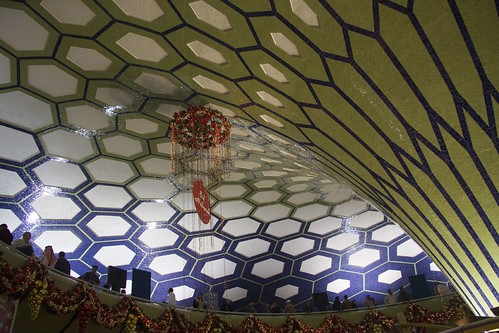
Abu Dhabi_2198Today we are going to Dubai, the centre of the world, to which increasing numbers of tourists and business people are coming. How do you prepare the nationals of a very conservative society with fairly strict gender separation for these intercultural encounters? Canadian, Mark Karstad, instructional designer at Dubai Women’s College for five years, decided to develop virtual fieldtrips to the USA, South Korea and Darfur amongst others through the virtual world of Second Life. The whole show is given over to exploring some of the many issues raised by this decision.


absolutely virtual:

Very few of the students at Dubai Women’s College take advantage of offers of foreign trips such as attending a trade conference in China. Mark Karstad, former instructional designer at the university, tried out the idea of virtual field trips using the online world Second Life. This enabled him to take his students to a range of safe destinations such as Islam Online and Darfur. It also enabled him to collaborate with a college in South Korea and the USA to enable virtual meetings with the students where for example the students came dressed in their national costumes.


In Second Life an avatar, a sort of cartoon character, represents you as you move and interact in the online world. You choose what this avatar looks like and how it is dressed. How would the students of DWC choose to represent themselves? The answer was without their abayas and in the designer clothes which they wear underneath. As Mark describes it, bling, meaning ostentatious jewellery.


absolutely private:

As a male employee in the women’s college Mark describes some of the norms he had to adhere to such as never coming into physical contact with the students, not even bumping into them on the stairs. He also describes how the students needed to have a chance to put on their abayas and shaylas before he entered the classroom. This meant that he had to knock and pause for word that it was safe for him to enter the room.

So long! Stay tuned.

The host of this show is:Anne Fox
Editor: Peter Kron

The next show will be coming to you on 8 August from Dr. Laurent Borgmann  in Germany.

absolutely intercultural 61 +++ stereotypes +++ prejudice +++ regional diversities +++ pre-fabricated phrases +++ national pride +++

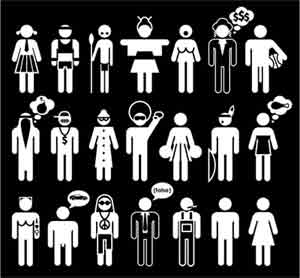
\“Germans are all punctual but don’t have a sense of humor, people from Great Britain do and always have their tea at 5 pm in the afternoon, Italian men pick up girls all the time, the French eat baguette, cheese and frogs’ legs. Women can’t drive cars and men simply cannot listen, young people are irresponsible because they get drunk all the time and old people are terribly inflexible.” You could easily continue this list about any nationality, age, gender, political or sexual orientation. Stereotypes are pre-fabricated phrases to generalize about certain groups of people. But how are they generated? Do they have any practical use in daily life or are they just wrong and useless? Are their fixed for all time once they have been established or can they change over time? In this show, we try to find some answers to these questions about stereotypes.

absolutely Spanish:
Emma Cuevas-Saunders, who is an ERASMUS student from Spain, has been studying and doing a practical training in Germany for about a year now. She tells us about her experiences with stereotypes in Spain and how prejudices about Germans almost prevented her from going abroad. We also learn that Spain, known as a nation marked by national pride, actually is divided into many different sub-groups, which each have stereotypes about the other groups. However, as Emma says, this is a rather positive aspect, because it demonstrates Spanish diversity and these stereotypes are also used as a conversation starter. But first, she tells us, that all Spaniards have discovered a new pastime: They like to sit on the beach and guess the nationality of the tourists, but perhaps this is also a stereotype?

absolutely Mexican-American:
In our second category we talk with Susana, who has her roots in Mexico, lives in the United States and currently is studying in Germany for one year. Although she is probably the expert on this topic, we thought she tends to underestimate the popularity of her two “home countries”, thinking that they are not very much liked in the world. We learn that stereotypes really can change over time, if people like Susana have the courage to go abroad, make their own experiences and afterwards, tell people about it.

absolutely Austrian:
We speak to Dr. Nicole Slupetzky from “Volkshochschule Salzburg” (institute of adult education) about the challenges connected with harmful stereotypes and the opportunities of friendly ones. While friendly stereotypes can provide you with conversation topics and sometimes make these conversations run more smoothly, harmful stereotypes can be responsible for hate and racism. Nicole emphasizes that it is important to talk about these stereotypes, to learn about the affected groups and sometimes even to laugh about these statements together. We discuss that, of course, we shouldn’t believe every stereotype we hear, because they can be produced in many different ways, by the media, the family or even education.

So long…stay tuned!

The host of this show is: Dr. Laurent Borgmann
Editor: Peter Kron

The next show will be coming to you on 25 July from Anne Fox in Denmark.


absolutely intercultural 16 +++ Moët et Chandon +++ Internships in France +++ Bilingualism +++ Intercultural faux pas +++


Using cultural informants from your own personal network.

Absolutely interactive highlights the Crossing Borders forum which aims to foster intercultural dialogue.

In Absolutely Personal we talk to Greg Houfe who had two French internships almost twenty years ago as part of his degree in European Business Administration.
Looking back did he think working at Moët et Chandon benefited him? Would he now employ a former intern preferentially over someone who had not had this type of experience?

In Absolutely Linguistic I talked with Gwen and Mia, 12 and 9, who are bilingual in Danish and English. Does this affect their identity? Do they mix the languages up?

And finally in Absolutely Confidential I talked to Tony Fox who was caught out in a conference in Germany recently.
The Host of this show is: Anne Fox

Download
Podcast-Feed
iTunes-Abo